
Let Us Be: Navigating Identity Online And Fighting Back

Anahita zipped up her backpack and tightened her hijab in the mirror, cheeks glowing with excitement.
Her mother stood at the door, holding out an extra bag.
“Take this too,” she said, adjusting the straps like she had a hundred times before. “ Fix your hijab properly. Stay safe.”
“I will, Mom. Promise.”
Anahita kissed her mother’s hand and stepped outside.
The morning street buzzed lightly, shop shutters opening, sunlight slipping between buildings. She took a deep breath. Today wasn’t just a trip. It was the biggest checklist item on the bucket list.
—------------------------
On the bus, the world softened. Music, laughter, messy selfies, everything loud and alive.
Anahita leaned against the window, smiling. Away from deadlines and expectations, wrapped in noise and friends, she let herself enjoy being light for a while.
—-------------------------
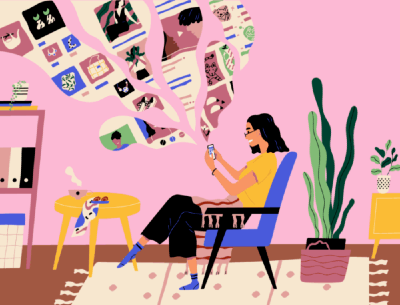
As they reached their destination in the north, the mountains rose like giant shadows, the rivers shimmered with cold light, and the crisp air wrapped around her like ice and silk.
That evening, they gathered around a bonfire. Flames cracked, sparks shot up like tiny fireflies. Someone dropped a bottle in the center, suggesting Truth or Dare!
“Spin it!”
The bottle whirled and stopped, pointing directly at Anahita.
“Dare,” she said, heartbeat quickening.
Instant chaos erupted.
“No no, make her run around the hill!”
“Eat a sandwich in one bite!”
Different suggestions rose from around the corner.
“Okay,” someone declared. “Sixty seconds Dance. No laughing.”
Anahita groaned, then grinned.
“Fine.”
The music started. And she danced. Awkward, unplanned, real.
For once, she didn’t pause to ask herself if she should. The fire flickered. Her friends clapped, cheered, filmed and teased. Sixty seconds passed.
And in them, she forgot the rules she lived by and felt how easy breathing could be.
—---------------------
The bonfire’s warmth faded behind them, leaving only the memory of glowing faces and flickering light as they climbed back onto the bus. They sank into their seats, stretching stiff legs, letting the gentle hum of the engine settle around them. The music softened, a steady pulse beneath the quiet chatter that began to rise.
Phones appeared almost instantly, little rectangles of light in the dim bus.
“Tag me in that one!” Anahita laughed, leaning over to watch a video of herself catching a marshmallow midair, cheeks warm from laughter, the golden glow of the fire painting the moment perfectly.
“Relax, I’m tagging all of you!” someone replied, thumbs flying across the screen, the tapping faster than any words could keep up.
Around her, the familiar chaos of friends, light and sound wrapped her in a quiet happiness, a moment that felt bigger than the ride, bigger than the night,
“Omg look at this slow-mo,” one friend said, showing a clip where Anahita spun around the bonfire with her friends cheering.
Anahita covered her face, laughing quietly. “Nooo, you guys caught that too?” She turned red. They shared group shots with crooked smiles, roasted-marshmallow disasters, and small candid moments that would have disappeared without the camera. The bus echoed with tired, happy noise until it rolled into her quiet town.
“Text when you reach home!” someone called from the bus window.
“I will!” Anahita smiled, adjusting her bag on her shoulder as the bus pulled away.
The streets felt still compared to the mountains, soft, dim, sleepy, but Anahita didn’t mind. Her heart was still full.
She walked under the streetlights, replaying the night in her head.
“I needed this,” she thought
“Good friends… good memories… I wish every week felt like this.”
She reached home, slipped out of her shoes when her mother whispered her name silently.
“Anahita?”
“I’m home, Mom,” she whispered back. “The trip was amazing.”
Her mother smiled sleepily. “Alhamdulillah. Go rest, dear.”
The moment she closed the door behind her, she let out a long, contented sigh and dropped onto her bed.
Her phone buzzed beside her.
Ping.
Ping.
Ping.
Friends tagging her, new posts, stories, little hearts and laughing emojis.
The memories were warm. So warm she carried them into her sleep. It was the perfect night. She slept completely unaware of the storm that morning would bring
—---------------------
Morning sunlight warmed Anahita’s face. She stretched lazily and reached for her phone.
The screen lit up. A flood of notifications. She rubbed her eyes and squinted, then started scrolling through them.
Her friends tagged her in pictures from the trip.
Compliment after compliment filled her screen.
“You look so cute here, omg.”
“We had so much fun yesterday!!”
“Angel energy.”
“Prettiest hijabi everrr.”
“Your smile >>>.”
She couldn’t help it. Her lips curved into a smile.
A comment made her giggle. Another, and another, each one a little spark, a quiet reminder that what she had done, dancing, laughing, letting herself be free, wasn’t wrong. For once, she could enjoy herself. Her chest felt light. Her heart felt warm. She had done it. She had let herself be herself.
She scrolled again, expecting more encouragement, small affirmations of freedom. More love. More warmth.
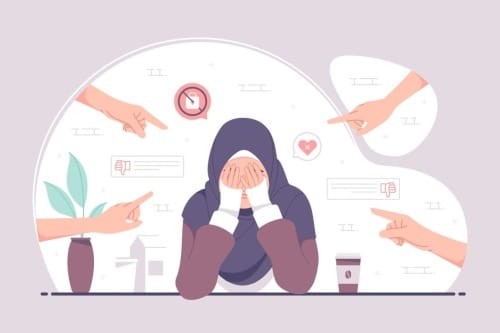
But then… her thumb froze. Some comments appeared. Sharp. Cutting. Unforgiving. Her stomach twisted. The warmth in her chest drained, leaving a hollow ache as if someone suddenly blew out all the candles inside her.
“Do your hijab properly or don’t do it at all.”
“Hijab for Allah, dance for Abdullah.”
“That's what freedom does to females.”
She read it again, slower this time, the words echoing louder than the laughter and firelight from earlier. The smile on her lips dropped instantly. Her skin went pale, breaths came short, shallow.
Her eyes widened, disbelief freezing her gaze. But deep down, she knew it was true. Her chest feels like something heavy has been dropped on it.
She forgot the compliments. She forgot the giggles. All she was seeing were those three comments stacked together like a verdict.
She went still. Perfectly still.
Just two comments. Two strangers. Two lines of text.
But they feel like someone reached through the screen and slapped the happiness out of her hands.
The joy she had fought to let herself feel faltered. The rules she had dared to bend pressed back against her chest, heavier than ever.
Her morning, her peace, her glow, all stolen in an instant. She pressed the phone to her chest as if trying to crush the words out of existence.
Images flashed before her eyes: women she had read about, women whose lives had been upended, harassed, erased. Their laughter, their freedom, and their choices vanished.
A single tear slipped down her cheek, slow and unblinking, tracing a line through the shock.
And then the dam broke. She began to cry, heavy, uncontrolled, the sobs rattling through her chest, the phone still pressed in her hand, the cruel words blinking up at her. Every sob is a reminder that the world outside her small bubble of happiness could reach in and take it away.
—----------------------
Sometime around noon, her mother called her for lunch.
Anahita dragged herself to the kitchen, shoulders heavy as if she carried the whole world with her. Her mother served her food, cheerful as always.
“So, tell me about the trip,” she said.
“What did you girls do? You barely messaged me.”
Anahita poked at her food.
It felt tasteless in her mouth.
“Nothing much,” she murmured. “Just normal things.”
“You all looked very happy in the pictures,” her mother tried again. “It must’ve been beautiful there.”
“It was,” Anahita said softly. Her voice sounded far away, even to her.
Her mother paused, watching her more carefully now.
“What’s wrong? You’re unusually quiet.”
“I’m just tired, Mom. Can I… go to my room?” Anahita took a long sight and asked, beggingly. Her mother nodded, confused and worried.
……………….
She came to her room with heavy feet and closed the door behind her. A shadow passed over her expression. She collapsed onto the bed and opened Instagram again.
ON SCREEN, NEW SHARES.
The video spreads faster than she can keep up, clipped, slowed, edited. Her laughter looped. A single step replayed again and again. A new title sits above it, phrased like advice, heavy with judgment:
“A Reminder: If You Wear Hijab, Wear It Properly.”
Arrows circle her body. Timestamps dissect her movements. People zoom in where her scarf shifts, where she looks unguarded for half a second too long. Comments pile up.
“Pick-me energy.”
“This is why girls shouldn’t travel.”
“Shameful.”
“Seek Allah’s guidance. You’re going astray.”
Her hands shake as she scrolls. The screen hesitates while new comments load, a small spinning icon, a held breath, her stomach tightening in anticipation, knowing whatever appears next will be worse than what came before.
“I feel so sorry for you, sister…”
“Not befitting of a Muslim woman.”
“Proof of how low women can stoop for attention.”
“Astaghfirullah.”
Each one gathers likes. The agreement multiplies. Pity curdles into accusation. Morality sharpens into a weapon. Her chest tightens, not from them, but from the thought she can’t stop.
What if her parents see this?
The questions she won’t be allowed to answer. The disappointment that will arrive before any explanation. She closes her eyes. Her breathing turns shallow.
Tears blurred her vision but did not fall. She was still caught between panic and disappearance.
She wasn't crying yet. She was realizing how much could be taken from her because of this.
—---------------------
Moments turned into minutes, then hours, but the time sought was irrelevant now.
She lay in bed staring at the ceiling. The dark felt alive, crawling around her.
Everyone at university must’ve seen it by now.
They’ll stare. They’ll whisper. They’ll judge.
She turned to the wall, curling into herself.
No… I’m not going. I can’t.
I can’t face anyone.
She thought and felt deep shame.
She switched off her alarm for university. Her thumb trembled as she pressed the button. The room sank into deeper darkness.
—-----------------------
Her phone buzzed multiple times. It's her whole life now. Waking up, seeing all the hate, sinking with it. She couldn't even dare to mute the messages.
Private messages and dm requests began to appear and her inbox swelled with messages. Judgment, blame, pity, and supposed concern came wrapped together. They shamed her, explained how she had failed, told her what she should have done, what she should be. Some advised, some invited her to message them privately, promising to guide her toward “better.”
She was told to fix herself before preaching modesty. Almost every message carries the same preface: I’m not judging.
And yet each one weighs her down with judgment, dressed in politeness, delivered with certainty.
The screen becomes crowded, intimate in the worst way, as if strangers have stepped too close, close enough to rearrange her life with their words.
She tried to tell herself it didn’t matter, tried to scroll past, to act indifferent. But the tightening in her chest betrayed her. She could not escape the suffocating pull of their words.
She dropped the phone as if it were burning.
Stop… stop… leave me alone…
She covered her ears, curled up again, shaking.
Then,
One day…
Among the flood of messages, one sat almost unnoticed, buried beneath hundreds of judgments, advice, and quiet threats. She hesitated before opening it, expecting nothing but more cruelty. Her thumb hovered, trembling.
The words that unfolded were startlingly gentle, almost impossible:
"Hey… we saw what happened. You’re not alone. We have a support group of thousands of survivors just like you from all over the world. You’re safe with us. We think you’d be a powerful addition."
"We got you."
Her chest tightened. Her mind screamed that it was too good to be true. A light flickered, fragile, almost mocking, in a place that had felt entirely dark. Spaces like this were rare, almost mythical: corners of the internet where judgment didn’t reach, where shame didn’t accumulate, where girls like her could breathe without fear, speak without being policed, and maybe even find courage that had been buried under hours of cruelty.
Her hand hovered, fingers shaking. Her eyes, tired and red, refused to fully trust it. And yet… a single, stubborn hope nudged her forward. Maybe, just maybe, this was real.
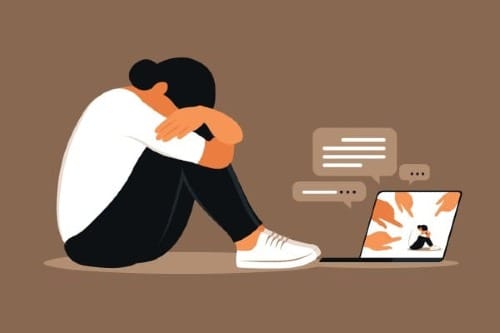
She clicked. The click made her enter a new world and her screen filled with hundreds of messages.
Women welcoming her. Women telling her their stories. Women from South Africa, India, Pakistan, the Gulf, UK…
“I was digitally abused too…”
“They body-shamed me when I married a YouTuber… I wasn't pretty enough for him.”
“My ex leaked photos of our private moments and I was looked down upon everywhere after that, even in my own family.”
“Someone recorded my video of riding a bike and they bashed me for riding it and called me ‘papa ki pari’ for taking a wrong turn accidentally …”
“I left my job after the slut-shaming…”
“My daughter was hyper sexualized even though she was a minor. They turned her innocent pictures into sexual ones just for their fun and views.”
I married a cricketer and they character assassinated me after divorcing him, stalked me, leaked my address, and recorded my vid without my permission and morphed them. I got rape threats every day. It was like hell opening my phone or going outside…”
A sea of wounds. A sea of survival. Anahita’s lips trembled not in fear now, but recognition.
For the first time in days,
she breathed…
a full breath.
GROUP ADMIN:
“We are planning something revolutionary. A protest. A global one.
We’re going to pressure governments and platforms to ban abusive slurs, policing, and misogynistic language.”
“We want you with us.”
Anahita stared at the screen.
Her reflection appears faintly on the glass, a girl broken, but not alone anymore. Her finger slowly typed…
“I’m in.”
—-----------------------------
The group call connected one by one, little circles lighting up as women joined from different cities and different time zones.
The moderator’s voice came through steady and organized.
“Alright,” she began, “let’s go over everything we’ve collected so far.”
In a simple white t-shirt and kind face, she appeared to be in her late forties, carrying a calm certainty and quiet strength, the kind that drew people in and made them feel protected.
A document appeared on the screen, full of notes and highlighted demands. A girl leaned closer to her camera. “We’re tired of brushing off online hate as if it’s harmless,” she said quietly. “It’s real. It affects our mental health, our jobs, our lives.”
“We need coordinated action,” another girl added. “Not individual complaints that get ignored.”
The moderator nodded.
“Exactly. We’re planning legal pressure. Platform pressure. Even government-level pressure.”
Another woman unmuted, her voice trembling but determined. “Can we add something about banning misogynistic slurs? Especially the ones that get used every time we speak up?”
“Yes, Slur-based hate needs to be flagged automatically. Zero tolerance.”
“And faster takedowns,” someone else added. “When a threat stays up for days, it’s already done the damage.”
“Plus trauma-aware moderators, not people who reply with ‘this doesn’t violate guidelines’ when we’re literally shaking.”
A soft hum of agreement filled the call.
Anahita listened quietly, absorbing every word.
—-----------------------------
A bigger virtual meeting came next, more faces, more determination. The movement was growing.
“Tomorrow is the day,” the Moderator announced. “We move together.”
A woman leaned forward. “Everyone will post the same hashtag so it trends worldwide.”
Someone added, “And the demands need to be clear:
•Ban misogynistic slurs
• Improve safety tools
• Transparent moderation
•Accountability from platforms.”
Anahita watched silently, feeling the fire but keeping her distance, like standing near a bonfire with cold hands slowly thawing.
—------------------------------
When the day arrived, it felt like the world was breathing louder. Crowds filled streets from Karachi to London to New York. Posters rose like sails. Chants merged into a wave of sound that travelled city to city.
“ONLINE HATE IS REAL VIOLENCE!”
“BAN THE SLURS!”
“WE ARE HUMAN!”
Anahita stood at the edge of the gathering, her scarf wrapped tight around her face. Her hands trembled as she held her sign:
“Stop Normalizing Hate.”
A girl next to her noticed her nervousness and offered a gentle smile.
“First protest?” she asked.
Anahita nodded. “First… everything.”
“Well,” the girl said, adjusting her own sign, “you’re braver than you think.”
For a moment, Anahita looked at all the women chanting, marching, holding each other up. Something inside her, something that had been shrinking for years, stretched and warmed.
Her fear didn’t vanish. But it softened into something she could walk with.
—-----------------------
That night, after weeks of protests, the group chat glowed. Messages poured in: NGOs supporting them, authorities listening, policies being reviewed. Every notification carried a spark of hope, proof that their voices had been heard.
Voice notes came next, laughter, sighs of relief, even a few tears. Heart emojis and photos of hugs, raised fists, and tired smiles filled the screen. The joy of people who had fought and refused to be silenced felt almost alive.
Anahita stared at the screen, letting it sink in. After weeks of fear, judgment, and silence, change had arrived. She typed slowly, deliberately: “Thank you for saving me.”
The reply came instantly: “You saved yourself. We just held the light so you could see the path.”
Her eyes stung, but this time it wasn’t from fear. It was hope, small but bright. The weight of fear, shame, and loneliness lifted slightly from her shoulders. Courage had been shared. Change had begun. And for the first time in a long while, she felt safe and believed that courage can bring change.
—------------------------
A few months had passed.
“From her window, the city blurred under the heavy rain, streets and buildings melting into streaks of gray.”
Rain fell heavily, drumming against the windows and washing the streets in gray streaks. From her window, the city looked blurred, as if the rain were washing the world.
She set the phone against a stack of books and stepped back, the cool scent of rain drifting in.
She pressed the record.
“My name is…” she stopped, then continued.
“I’m the girl who went viral.”
She spoke of dancing in her hijab, of joy that had turned into abuse, of messages and threats that followed her into silence.
“I stayed quiet,” she said, her voice low. “I thought silence would protect me. It didn’t. Silence doesn’t help,it feeds the oppressor. When injustice isn’t called out, it grows. The scars… they don’t disappear overnight. It takes months, sometimes years, to feel whole again.”
“This isn’t only my story,” she said. “It belongs to every woman told to disappear, online and offline.”
She looked directly into the camera, her eyes steady, and for a moment the room felt quiet, heavy with all she had carried. She thought of every girl who had been silenced, every moment of fear and doubt, every scar that took months to fade.
Then, softly but firmly, she spoke:
“Reclaim your spaces. Gently, firmly, responsibly… in a way that protects you and doesn’t let fear take over.”
She ended the video and placed the phone face down. Outside, the rain poured, heavy and cleansing. A train passed in the distance, its low rumble carrying lives forward.
Gradually, the storm eased. Streets glistened, leaves shone, the world felt lighter, clearer. She breathed in the cool air. For the first time in months, the quiet inside her felt steady, free, and a little stronger than before.
Marwa Khan is a fiction writer and poet whose work explores identity, silence, and the social contradictions faced by women in contemporary society.
Member discussion