
“Saas-Bahu Dramas” Empowering Or Overdone?
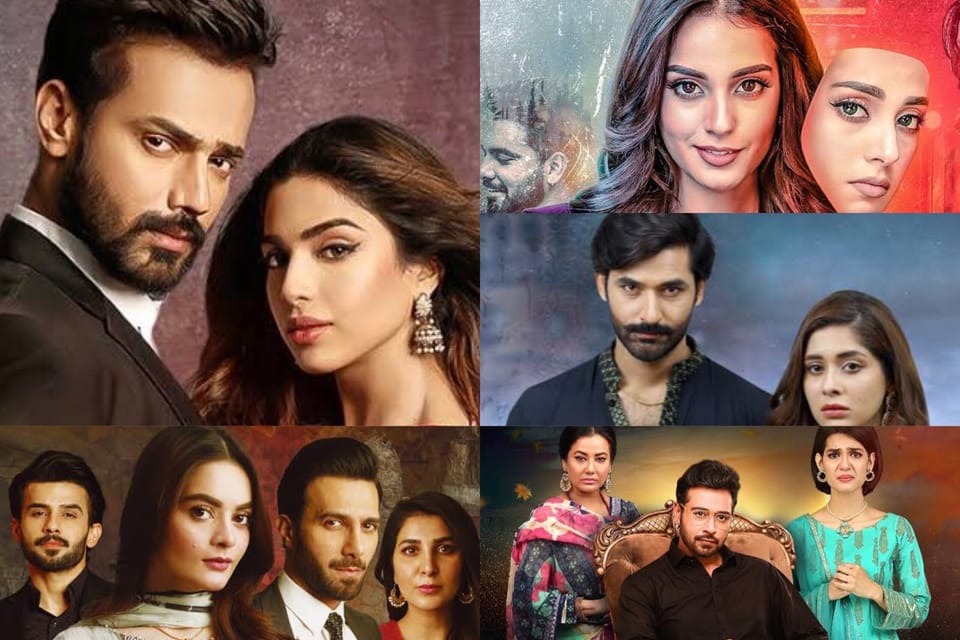
When veteran actress Samina Ahmed made remarks about “saas-bahu” dramas a few weeks ago, the internet split into two teams. There were those who agreed with her about the relevance of such themes on our tv screens, where she talked about how they are mirrors of our society and called them empowering. Then there’s the other side, who has long been championing for a change in what we see represented on our screens, and who found these comments limiting when it comes to the representation of women characters. After all these remarks came at a time when there’s been already large scale criticism against what many called “mindless” or “problematic” tv scripts particularly when it comes to women’s representation. According to Ahmed, that criticism is largely from within the industry, as she believes audiences still really like what she describes as “household dramas”. She isn’t wrong about the criticism within the industry. Shortly after Ahmed’s interview, Arjumand Rahim, who’s been in the tv industry for three decades now, talked about how she doesn’t like playing “cardboard characters with no backstory.” She described how many women are given maternal roles with no other personality and where they don’t have much to do, but that she has often turned down these repetitive roles.
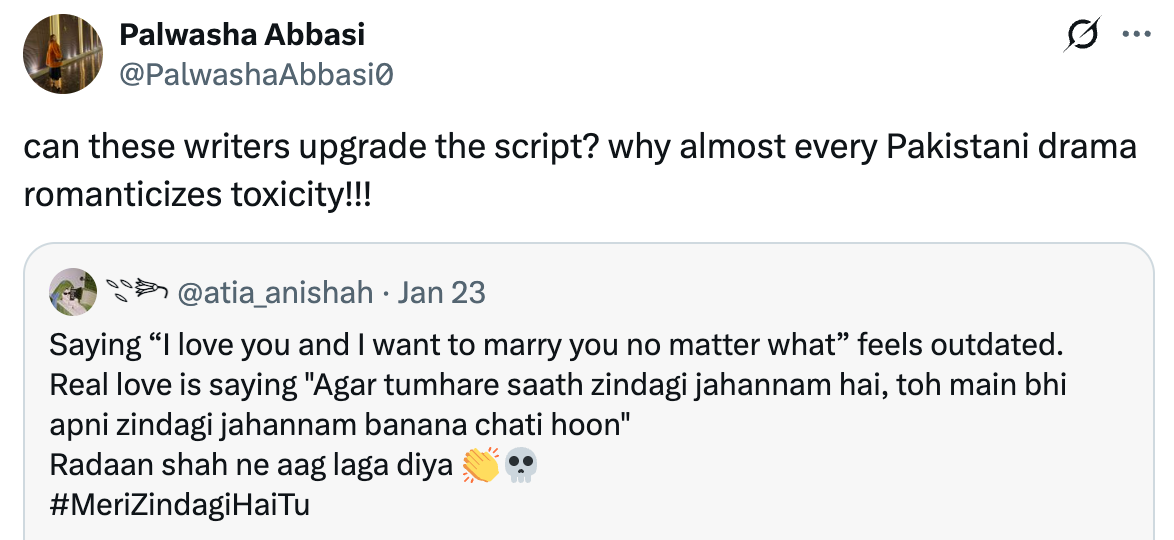
Still, that doesn’t mean that audiences don’t have a lot to say about the same old stories going around. A growing number of voices online have been demanding more from the Pakistani drama industry particularly as awareness around the power of representation on screen increases amongst the younger generation.
But where there’s criticism there is also an appreciation for the content that gets it right. Psychiatrist Dr Maheen Altaf took to X recently to share her thoughts on the representation of mental health and seeking help in recently aired drama Goonj. She points out how healthy representation of the struggles of mental health including championing for seeking the right kind of help. Instead of advocating for self diagnoses or turning to AI, Goonj showcases an honest conversation about the merits of reaching out for qualified medical support when someone may be struggling.
A job well done! 👏 PUBLIC SERVICE MESSAGE;
— Dr Maheen Altaf (@DrMaheenAltaf) January 9, 2026
As a psychiatrist, I’m so happy to see Pakistani Drama Industry highlighting mental health issues, breaking the stigma and focusing on the importance of consulting a mental health QUALIFIED experts rather than googling and and not… pic.twitter.com/Vl2guCXTbq
It’s just one example that supports Arjumand Rahim’s point of view about representation, and Rahim’s comments overall hone in on a point that Ahmed seems to have missed out on. It’s not enough to see someone or something be represented on screen. What matters is how that particular group is represented. Over the course of her career, Rahim has played a variety of women, many of whom play some familial role, if not a defining one, but it is those who have nuance beyond the relationships they portray that she enjoys the most. Maybe because it is those roles that display women as holistic beings. Her approach to her characters doesn’t take away from their relationships and roles in the house, in fact it adds to it, because it shows them as full human beings whose own personalities, flaws and nuances add to the lives of the people they are around, in good and bad ways.
Take Rabi in Tan Man Neelo Neel, which could in many ways be called 2025’s most controversial show because of it’s blatant portrayal for mob lynching and links to concepts of blasphemy in our society. She’s funny, ambitious, slightly rebellious and outspoken. She’s also cheesy, romantic, and hardworking, and all of those personality traits only strengthen the relationships she embodies on screen as a daughter, niece, cousin and friend. In fact even at her very tragic end, it is the way she has been developed as a character that allows audiences to feel the abrupt nature of what has happened because Rabi is not just a character on a screen anymore, she is a young girl full of life just like the young girls many of us may know or relate to.
On the other hand there’s characters like Zeba in Kafeel, who has also been talked about so much that actress Sanam Saeed, who portrayed the character, felt the need to publicly clarify that suffering and tragic circumstances should not be glorified. In an instagram post, Saeed referred to Zeba as naive, and bluntly adds that sacrifice and suffering are not experiences to look up to. She also urges women around her to not miss the “magic opportunities” that come their way as they saw Zeba do. It’s a case of a tragic story done right.
We cannot ignore the ills that may plague the world around us, but representing them in a way that calls them out versus in a way that can further glorify them are two very different approaches. Jama Taqseem was another one of 2025’s wins, even if it did fall under that much debated ‘saas-bahu’ umbrella, because it also portrayed real people. Aside from it’s much applauded raw portrayal of sexual assault that silently plagues so many homes, it showed characters on all sides of the spectrum as simply being human beings who were flawed and learning in their own way. Ending with characters like Laila’s and Qais’s respective mothers finding new paths for themselves, much of the dialogue went a long way in making a mark about respecting differences and finding joy through differing choices in life.
For many Pakistani dramas, it can seem there’s a long way to go for better stories, but if we look closely, there’s already so much being done to make a mark the right way. We just need to platform those stories better.
Anmol Irfan is a freelance journalist, editor and the co-founder of Echoes Media. Her work focuses on marginalised narratives in the Global South, looking at gender, climate, tech and more. She tweets @anmolirfan22
Member discussion