
Pakistan's Sustainability Crisis Amidst Global War
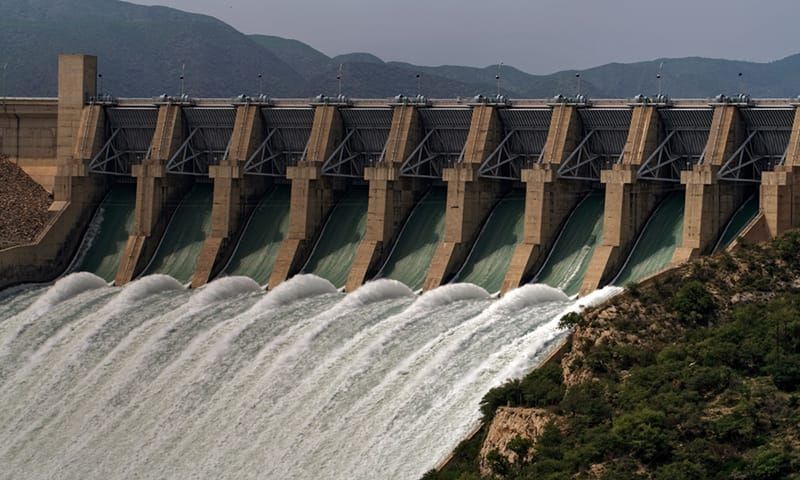
In Lyari water shortage has forced people to consume sewage water as conditions become dire. The issue has only magnified in the past 2 months with the construction of the Lyari transformation project that has punctured waterlines introducing sewage for local consumption.
‘There are some areas that receive running water during the day but it’s becoming less frequent now", Sabeer, a social worker in Lyari, shared with Echoes Media.
With little to no access to clean water, deteriorating health is a common experience for people in Lyari. Parents frequently bring their young children to the hospital for infections caused by water unfit for human consumption. “It's becoming an everyday reality”, Sabeer added.
The collective influence of the climate crisis, lack of dams to collect water and the geopolitical efforts to weaponize rivers coming from India means a sustainable future for Pakistan’s water supply is now at risk.
“In the short term, there won’t be any serious impact. However in the long term if upstream diversion and storage is made possible by India, it can create water shortages.” Naseer Memon, senior advisor at Sustainable Development Policy Institute (SDPI) shared with Echoes Media.
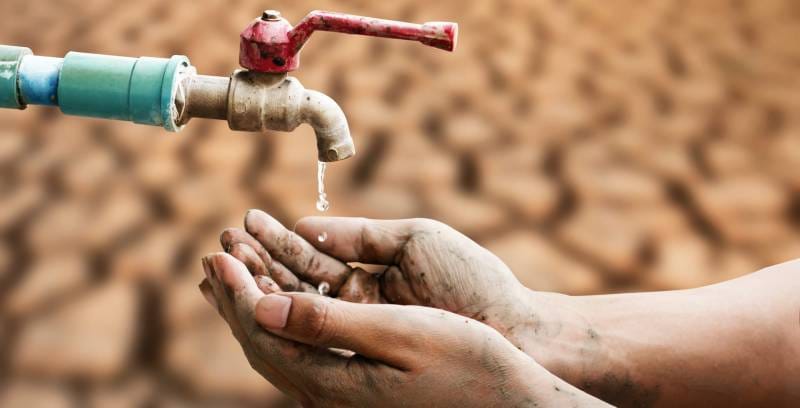
India’s Water Threat
In a statement on June 5, India’s Foreign Ministry claimed that the treaty will remain unsuspended until Pakistan brings a halt to its ‘cross-border terrorism’ Efforts are underway to cease water inflow, the flow of Indus water to Pakistan will stop, India’s water resource minister claimed a few days after
Whereas a month prior, in May 2026, India commenced its project to construct a 23km tunnel to divert water in flow from Chenab’s tributary to Beas’s tributary. The tunnel will directly connect both river valleys, letting India have a greater share due to its infrastructural advancements.This is a serious risk for Pakistan when according to the IWT, western tributaries have been primarily allotted to Pakistan.
“While the Indus and Jhelum rivers cannot be distorted by India due to the geographic limitations,Chenab river will remain a sensitive stream in coming years”. Memon shared further.
Yet amidst Pakistan's celebrated victory, Pakistanis silently live the untold reality of the water wars lost at home. ‘In Lyari some areas including Kalrai Muhala, Ali Muhammad Muhala, Saraguata and Kalakot have had no access to water. A persistent tragedy since the last 5 years that has forced people to travel long distances to get water’. Sameer explained.
In the efforts to preserve the limited water, Amaan Khan, founder of Satoone Naiki has been setting harvesting pumps to ensure water supply in water constricted areas. Khan shared the detailed procedure that takes place to collect rain water in areas prone to flooding. Drainage pipes are installed that collectively dump up to 70,000 gallons of water in premade wells. The recurrent water flow assures that water reaches home pipes in city areas affected by water shortage. Khan further shared the foundation's efforts in being able to restore trees in Karachi through efforts of channelizing water flow from flood regions to the ones experiencing water shortage. This also ensures minimization of droughts as well as sink holes in more flooded areas.
The foundation has also laid out large containers to collect rain-water in cities and the northern district. Although not widely practiced in urban areas before, this may be a dire solution as supply decreases and demand increases. Besides the primary objective of increasing natural inflow of water in residential areas, it also provides relief from water stagnation on roads. Instead it provides an outlet where water is preserved rather than flooding gutters. This also becomes a means for providing drinking water in the shanty homes of Karachi, where otherwise people consume polluted and unhygienic water.As temperatures rise this has become a reliable way to have access to water that is stored in wells and transported further in water pipes within these areas.
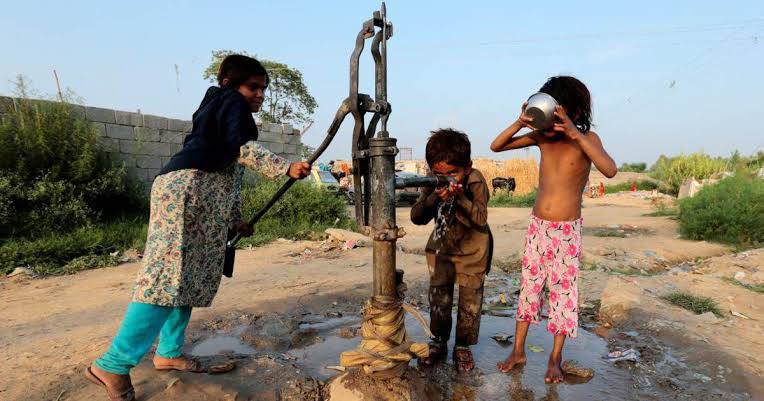
In the rural and farm lands despite local efforts that prove insufficient, water shortage has also been indirectly impacting the agricultural produce, and the economy.
‘IWT suspension is a relatively recent development and its impact on groundwater will take time to unfold. However it can create water shortages between October and June i.e Rabi and Early Kharif season when flows remain low in Sindh and Punjab.’ Memon stated.
Earlier in 2025,months after IWT violation, Dr Abdul Rauf, former Director General of Agriculture Research KP, expressed concerns over reduced water reaching the river basins in KP. The crop yields heavily rely on the favorable water availability, soil fertility and weather conditions for maximum crop produce. Violation of the IWT continues to impact lesser crop harvest in 2026, along with factors of bad weather and the 2025 floods logging the sites of the harvest.
Temperatures have risen by 2-6 degrees above the baseline range coupled with lesser water availability reducing flower production in Sindh and Punjab. According to Pakistan Society for Horticultural Science, stagnant water of the 2025 floods, fluctuating weather conditions and climate crisis in Punjab has contributed to growing pests and diseases in the produce, lowering the yield.
War Creates Risk
Amidst the IWT violation crisis impacting the production of the king of fruits, the skirmishes on the Pak-Afghan border have further reduced economic gain. Trade has halted trade with Afghanistan. Moreover, the Iran-Israel war has also hindered the transport and export of mangoes in the gulf and the Middle East. The produce that made up to $110 million in international sales has reduced from 80,000 to 30,000 tonnes.
The beginning of this slippery slope for trade began when the strait of Hormuz, a lifeline for major supply for oil for the majority of Europe, US, the Gulf states, China and Pakistan, ceased transportation as a defense strategy against Israel and USA. The closure has had a historic impact on the fruits and vegetables’ export market that have suffered major losses after petrol hikes doubled transportation costs from what they were last year.
Waheed Ahmed, chief patron of the All Pakistan Fruit and Vegetable Exporter Association, told AFP that mango exports are not reaching international markets which have to be challenged into the local stores. The season’s biggest export is returning home with little to no contribution to the economy.
The trend continues to have a heavy human impact as war continues in the Middle East.
5 months later petrol hikes continue. Beginning from a sharp increase of 55rs per liter in march 2026, the record breaking price stalled at Rs 478 per liter triggering serious public outrage in April 2026. While rates have reduced, the outrage lingers on inflation continues now costing 326rs per liter. Despite reduced rates, Pakistanis have already experienced a heavy impact beyond trade. For the locals, raised fares for everyday commute have remained unchanged after diesel prices dropped. “Conventional economics tells us that oil price hikes trigger a chain reaction across the economy,” Prof Kamran Butt shared with Dawn.
This translates into everyday commute costs, food and daily goods adjusting market rates in accordance to the shipment and transportation costs. For the daily wages workers and domestic staff this cuts deeper as daily inflation questions their daily spending habits hardly amounting to bare minimum.
Sadaf a domestic worker told Echoes Media “It costs me double the amount to go from Korangi to Clifton Karachi, after the petrol prices increased since March 2026.My income is still the same, it’s difficult to make ends meet”
As petrol prices continue to fluctuate, market rates remain high which maintains a global trend in international markets. Initial initiatives such as petrol quotas and work from home policies to prevent the heavy impact of petrol price hikes are an insufficient measure against the disruption of the local and international markets.
Coupled with skirmishes over the IWT and the missile exchanges on the Pak-Afghan border , it seems that even if wars cease, the weaponization of water and fluctuating import of oil from Iran risks serious issues for Pakistani’s dependent on both for everyday survival.
While efforts of simply relying on limiting commute and everyday expenses proves fruitless, this continues as a standard practice by most Pakistanis to avoid the financial strain.
As for maintaining water sources, Memon stated: “Pakistan should focus on water conservation. Our 30-40% conveyance losses from canal head to farm are a major challenge. We can save considerable water by better maintenance of infrastructure, cropping patterns, water course lining and improved agricultural practices.”
As of now Pakistan is in a vulnerable state with limited sources employed to reduce the impact of the wars. If this trend continues Pakistan risks stability in both the domestic living and geopolitical position.
Huda Azam is a journalist and a writer. Her work includes gendered issues, climate crisis, culture society and how they intersect at the evolving geopolitics and crisis at large
Member discussion