
When Pregnancy Ends, the Silence Begins
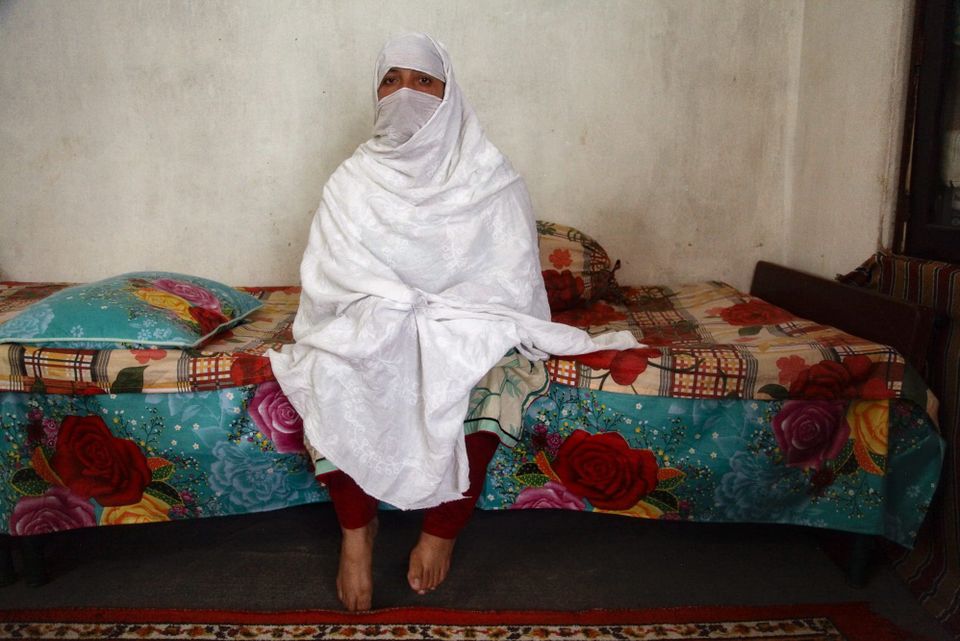
In a two-bedroom home in Chakiwara, Karachi, 35-year-old housewife Asiya Bibi keeps looking at the second-hand cot she bought from a weekly market.
“I was excited to welcome my child,” she said as she ran her fingers over the smooth wood.
The cot now sits untouched in the corner of her room, beside folded baby clothes and unopened packets of diapers. Months after losing her pregnancy, Asiya says she still avoids walking past maternity stores and cannot bear the sound of newborn babies crying in nearby homes.
“No one really talks about what happens after,” she said quietly. “People only said I could try again.”
For countless women in Pakistan, miscarriage is treated as a private tragedy meant to be endured silently. Conversations often revolve around physical recovery, while the psychological aftermath, grief, anxiety, depression and other symptoms associated with trauma, remains largely invisible.
Yet pregnancy loss is far more common than many people realise. A 2021 series published in The Lancet estimated that around 23 million miscarriages occur globally every year, translating to roughly 44 pregnancy losses every minute. Researchers involved in the study also warned that the actual number may be higher due to underreporting and miscarriages that occur before pregnancies are clinically recognised.
In Pakistan, where mental healthcare infrastructure remains limited and conversations around reproductive health are often shaped by stigma and silence, many women navigate the emotional aftermath alone.
A grief left unnamed
Miscarriage rarely announces itself as grief in the way other losses do. There are no rituals that fully contain it, no shared language that always fits, and often no space that allows it to linger for as long as it needs to. Instead, it is absorbed into silence, into homes where life continues on the surface, and into bodies that carry the memory of what was lost long after the pregnancy has ended.
For many women, the absence is not only physical but social. Conversations shift quickly from loss to recovery, from mourning to expectation: when to try again, what went wrong, what comes next. But beneath that surface, emotional weight accumulates in ways that are rarely spoken about.
Asiya Dawood, founder of the Asian Miscarriages Hub, remembers her pregnancies as cycles of hope and collapse. She has experienced multiple miscarriages over the years, losses that came between nine and 23 weeks of pregnancy.
Her first miscarriage, she recalls, came about a year after marriage. There was no clear explanation at the time, only medical uncertainty that stretched into repeated investigations and procedures. Later, she was diagnosed with an incompetent cervix, a condition in which the cervix weakens during pregnancy, increasing the risk of early labour and loss. In subsequent pregnancies, she underwent a cervical stitch procedure in an attempt to sustain the pregnancy.
“I did a lot of research myself,” she said. “I needed to understand why this was happening to me.”
But even when there were medical explanations, the emotional experience remained unresolved. Over time, Asiya began to withdraw socially. She describes avoiding weddings and gatherings, anticipating the questions that would inevitably follow: why she had not yet had a child, what she was waiting for, what was missing.
“You become the topic of the evening,” she said. “Even when the event has nothing to do with you.” The experience, she said, was shaped not only by grief, but by repetition, the return of loss just as hope began to settle.
Across other women’s experiences, similar emotional patterns appear, even when circumstances differ.Ramma Shahid Cheema, a communications and PR expert and founder listed on the Women in PR 40 Over 40 Power List (UK), has lived through multiple miscarriages over more than a decade while undergoing treatment for infertility and endometriosis. She describes a sense of emotional exhaustion that continued to build with each cycle of pregnancy and loss.
“I would imagine my children’s whole lives,” she said. “And then I would have to grieve for them all over again.”
At one point, she said, Ramma says she began to feel “less than human” for not being able to carry a pregnancy to term. The physical pain of her condition, combined with repeated loss and social pressure, contributed to a prolonged period of psychological distress.
For Farah, a Gen Z mother in her late twenties who has experienced two miscarriages, the grief arrived differently, less through long-term medical struggle and more as sudden rupture.
“I didn’t know what to call it,” she said. “Everyone kept saying it happens, you’ll be fine. But I wasn’t fine.”
She describes a disconnect between visibility and support: conversations about miscarriage exist more openly online, but do not always translate into care within families or communities.
“There is information everywhere,” she said. “But when it happens to you, you still feel alone in your own home.”
Across these lives and timelines, miscarriage emerges not only as a medical event, but as an emotional experience shaped by silence, repetition, and the absence of structured psychological care. In many households, conversations move quickly from loss to the future. What remains unspoken is what happens in between, anxiety, fear of recurrence, and the emotional weight carried in private. It is this unspoken space, between loss and language, where many women find themselves stuck.
The numbers behind the silence
Globally, pregnancy loss is far more common than it is discussed. According to the World Health Organization, miscarriage affects millions of women globally each year, with approximately 10 to 15 percent of known pregnancies ending in miscarriage. Health experts note that the emotional impact of pregnancy loss often remains overlooked despite how common the experience is.
In Pakistan, however, the scale of pregnancy loss is harder to map with precision. The last comprehensive Maternal Mortality Survey was conducted in 2019, and there has been no updated nationwide, publicly available survey since then that systematically captures maternal health outcomes, including miscarriage and early pregnancy loss. In the absence of recent national-level data, estimates are often drawn from fragmented hospital records, smaller studies, or global modelling rather than a complete picture of lived realities across provinces.
This data gap makes it difficult to fully understand how often pregnancy loss occurs, who is most affected, and what patterns exist across age, geography, or socioeconomic status. It also means that the emotional and psychological consequences, including anxiety, depression, and trauma responses reported by women, remain largely outside formal health metrics. What is visible in individual testimonies and clinical anecdotes is still not fully reflected in national statistics, leaving a silence not only in conversation, but also in measurement.
“People told me to move on”
For many women, the emotional aftermath of miscarriage is shaped not only by loss itself, but by how quickly that loss is expected to be set aside. In Asiya Dawood’s case, the pressure did not always come in direct confrontation, but in quieter social expectations that followed her into everyday life. After multiple miscarriages, she began avoiding weddings and gatherings altogether, anticipating the questions that would inevitably circle back to her absence of children.
“I call it the toxic society,” she said. “Those are the kinds of questions I was constantly asked, in very polite ways, but they stayed with me for a very long time.”
That sense of being watched, and evaluated through motherhood, often turned grief into something private and isolating. Instead of being given space to process repeated loss, she said the response from her wider social circle frequently reduced it to reassurance or resolution, the idea that she would “try again” or that it “was not meant to be.”
Ramma describes a similar experience of dismissal, but one intensified by medical uncertainty and years of infertility treatment. After repeated miscarriages, she recalls how explanations often arrived in simplified form, that it was “just biology” or that embryos were not viable, statements that offered clinical closure but little emotional recognition.
“What you don’t want to hear,” she said, “is that it wasn’t meant to be.”
Over time, she said, she internalised the pressure, beginning to see herself through the same lens of failure that others projected onto her. The grief of each pregnancy loss was compounded by the absence of language to hold it, leaving her to navigate both physical pain and emotional isolation simultaneously.
For Farah, who experienced two miscarriages in her late twenties, the response was more immediate and dismissive. She recalls being told repeatedly that it was “normal,” that she would “be fine,” and that she should “try again.” While intended as reassurance, she said these responses often erased the emotional reality of what she was experiencing in the moment.
“I wasn’t fine,” she said simply. “But I didn’t know how to say that in a way people would understand.”
Across these experiences, a pattern emerges: grief is often acknowledged only briefly before being redirected toward recovery. In that redirect, many women describe feeling that their loss is recognised medically, but not emotionally, spoken about as an event that has ended, even when its psychological impact continues long after.
What trauma can look like
For many women, miscarriage is not experienced as a single, contained event but as something that continues to echo long after the physical recovery. Psychologists say this emotional aftershock can take different forms from persistent anxiety in later pregnancies to intrusive thoughts, emotional numbness, and a lingering sense of fear around the body itself.
Dr Nosheen, a clinical psychologist who has worked with reproductive and maternal mental health cases, says one of the most common responses she sees is anticipatory anxiety.
Women who have experienced pregnancy loss often enter subsequent pregnancies with heightened fear, constantly monitoring their bodies for signs of danger.
“They are not just pregnant,” she said. “They are also waiting for something to go wrong.”
In some cases, she explains, the mind begins to associate pregnancy itself with threat rather than hope. This can lead to sleep disturbances, avoidance behaviours, and emotional detachment as a form of self-protection. What may appear externally as calm or acceptance is often, she notes, a coping mechanism rooted in fear.
Dr Zohaib, a psychiatrist, describes a similar pattern but emphasises how grief can sometimes overlap with trauma responses, particularly when miscarriages are repeated or medically complex. While not every case meets the clinical threshold for Post-Traumatic Stress Disorder, he says many women exhibit symptoms that resemble trauma, including intrusive memories, heightened vigilance, and emotional numbness.
“In repeated loss, the body remembers even when the mind tries to move on,” he said. “Fear becomes stored in everyday life.”
He adds that emotional responses are often shaped by the absence of structured support systems. In many cases, women do not receive counselling after miscarriage, and are instead advised to focus on physical recovery or future conception. This lack of psychological intervention, he says, can leave emotional distress unprocessed for long periods.
Both psychologists highlight that cultural expectations further complicate recovery. In environments where miscarriage is quickly followed by pressure to conceive again, there is often little space to grieve fully. Instead, women may suppress emotional responses in order to meet social expectations, which can intensify feelings of isolation.
Where do women go for help?
In Chakiwara, the second-hand cot still sits in the same corner of Asiya Bibi’s home. It is no longer something she prepares for, but it has not been moved away either. Life, she says, has continued around it rather than through it.
After multiple miscarriages, she describes recovery not as a return to how things were, but as something slower and less defined, a process shaped by time, routine, and the quiet decision to keep going even when nothing feels fully resolved.
There was no structured psychological care offered to her after each loss. Like many women, she says the focus remained on physical recovery and the possibility of future pregnancies, while the emotional weight was expected to settle on its own. In the absence of formal support, she learned to navigate grief privately, within her home, and within herself.
At times, she says, the hardest part was not only the loss itself, but the absence of a place to put it. Friends and relatives would offer reassurance, or suggest that she try again, but there was rarely space to sit with what had already happened.
“You move forward,” she said. “But you don’t really move on.”
Over time, Asiya began to find ways to live alongside what she had experienced — not by resolving it, but by making it part of her daily life in ways that do not always have words. Some days are easier than others, she says, but there is no single point where the grief ends or becomes separate from everything else.
Mental health specialists say that what women like Asiya experience is often left unaddressed not because support does not exist at all, but because it is not systematically integrated into post-miscarriage care. In clinical settings, follow-up usually focuses on physical recovery, while psychological screening, grief counselling, or trauma-informed care remain limited or absent.
Some doctors argue that even small interventions, a referral to a psychologist after repeated loss, structured counselling sessions, or simple grief acknowledgment during postnatal visits can reduce long-term emotional distress and help identify anxiety or trauma responses earlier.
Community-based support, too, is increasingly being recognised as part of the gap. In the absence of formal systems, women often turn to informal networks, speaking to others with similar experiences, or finding peer spaces where miscarriage can be named without shame. Mental health practitioners say that while these spaces cannot replace therapy, they can reduce isolation and help women articulate experiences that are often kept silent.
In her home in Chakiwara, the cot remains a reminder of a future that once felt certain. She does not speak of it as closure. Instead, she speaks of learning how to exist within what remains of continuing life while carrying what did not arrive, and of navigating a grief that, for now, has no formal place to go.
Aleezeh Fatima is a pharmacist-turned-journalist based in Karachi. Her work focuses on climate, displacement, migration, health, and human rights. When she’s not reporting, she’s either hoarding books and jhumkas, indulging in sappy sitcoms, or sharing a laugh with friends at a coffee shop. She tweets at @dalchawalorrone.
Member discussion